Reviews
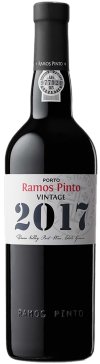
December 2019 95 Points The Wine Advocate
“The 2017 Vintage Port is a blend of 70% Touriga Nacional (a big increase this year), 15% Touriga Franca, 10% Sousão and the rest a field blend from old vines. It comes in with 94 grams per liter of residual sugar. It was aged for only six months in very old (50+ years) Portuguese vats (balseiros) and then in cement tanks. When first seen, this was a tank sample in Porto. It's now bottled and in the USA. This seems rounder and less invigorating than the winery's Ervamoira this issue, but some may prefer the lesser personality here—relatively speaking. What you get in return is intense fruit flavors, leaning to blue fruits, the just-crushed essence of the fruit. It coats the palate and is simply delicious. The structure is not as stunning, but there certainly is some, even though this is rather approachable.
That said, with a couple of days open, this developed beautifully—and better than the Ervamoira. With time, this acquired more intense aromatics and more intensely flavorful fruit. It blossomed. The hallmark of this wine became its suddenly (and surprisingly) rich fruit. Yet it is graceful too. With this performance, I do not prefer the Ervamoira anymore. It remains to be seen how well they both age over a long term. They both drank well after being open for a few days, but every young Vintage Port of quality should. It will certainly hold well for a few decades or more. In the shorter to mid-term, I expect this to become sterner, drier and more intense, as it sheds the baby fat and shows some underlying steel. It's entitled to an uptick in score.”
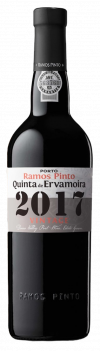
December 2019 94 Points The Wine Advocate
“The 2017 Vintage Port Quinta da Ervamoira (in Douro Superior) is another Port from Ramos Pinto in this vintage that is Touriga Nacional-dominated—60% of the blend. The rest is Touriga Franca (15%), Sousão (10%), Tinta Barroca (10%) and Tinto Cão (5%). It comes in with 98 grams of sugar. This is another of those Single Quinta Ports that is not really intended as a downgrade over the regular Vintage Port. Rather, it is just a different expression of terroir—and it is actually pricier than the regular Vintage Port that Ramos Pinto also made in 2017. A defining feature of this elegant Port is always going to be the powerful aromatics, mint, eucalyptus, cistus and so on. It is all about the personality. There isn't a lot of fleshiness. It is not as rich as the regular Vintage Port, but it may have more precision, intensity and focus, as well as more personality. It showed a little more grip on the finish after a couple of days open. In the mid-palate, there is considerable finesse and no jamminess. Then, there's the big finish with some notable grip from tannins. All the while, it is fresh and lifted. A couple of days later, it was drinking pretty well. If it is not quite as rich as the regular Vintage Port, it often seems a brighter and livelier one, as well as a delicious one. This should be approachable fairly young and then hold well for a few decades or more without a problem.”
December 2019 93 Points, Year's Best Tawny Ports Wine & Spirits
“Fully mature, luscious and fat, this has the dark bitterness of tobacco and espresso to balance its richness. Ignacio Monclus of Brooklyn’s Camperdown Elm suggested it would take the place of a spirit after dinner: “It has the noble wood, classic and on the dry side.”

December 2019 94 Points Wine & Spirits
“Ramos Pinto takes an elegant approach to Vintage Port, investing the wine with energy rather than sheer power. This 2017 is rich in tannins, rounded and chocolatey, yielding high-toned notes of ginger and pear skin over racy, floral plum flavors. It has a dynamic presence, tight, juicy and clean, suited to aging for two decades or more.”
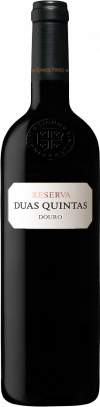
August 2019 93 Points The Wine Advocate
“The 2017 Duas Quintas Reserva is a 60/30 blend of Touriga Nacional and Touriga Franca, plus Tinta da Barca and Sousão for the rest, aged for 18 months in a mixture of used barrels (90% French) and large vats. It comes in at 14.5% alcohol. This is a lovely DQ Reserva, a good competitor to fine vintages like the 2016, 2015 and 2011 (which is revisited this issue, in fact). This feels fresher, fruitier and livelier than most. While it doesn't seem quite as dense or as muscular as the 2016 (and certainly not the 2011), it is arguably more expressive and shows more finesse. The balance is perfect. As it airs out, it shows the power that will allow this to age well, too, even if it is relatively accessible. This looks like the best since the 2011—and in a more elegant style that many will prefer.”